
Therapy for Teens and Adults in San Marino

I work with teenagers, nonbinary youth, and young adults who are trying to figure out who they are inside families and communities that already have a strong opinion about that question. A lot of my clients are navigating more than one cultural world at once: the expectations that live inside the home and the version of themselves that exists outside it. My practice is built for young people who are holding a lot and need space to set some of it down.
Santa Anita Park sits at the western edge of Arcadia, and the Arcadia Arboretum stretches just south of the racetrack with its peacocks and historic buildings. Arcadia High School anchors a community that places significant value on academic achievement, and the neighborhoods along Baldwin Avenue and Duarte Road hold an incredibly diverse mix of families who have built lives here across generations. Temple City borders the western edge, and the broader San Gabriel Valley corridor connects Arcadia to a wide network of communities with deep cultural roots.
Many of the teens and young adults I work with from this area are managing a quiet kind of pressure that does not show up in a diagnosis but absolutely shows up in their bodies and their sleep. The expectation to excel academically, to honor the family, to make the sacrifices worthwhile: these are real and heavy things to carry. Therapy for teens near Arcadia, CA at my practice is a place to talk about what is actually going on without it becoming a referendum on your family or your culture.

How it works

My approach starts with your whole story

I bring a culturally informed lens to everything I do, which means I am not going to ask you to check your background at the door to talk about your mental health. The family dynamics, the cultural context, the generational expectations: all of that is part of the conversation. I work with EMDR, talk therapy, and creative tools depending on what fits, and I adapt my approach to each person rather than fitting people into a method.

Book a discovery call

We begin with a free 20-minute consultation. You share what is going on, I share how I work, and we both figure out whether this makes sense. There is no pressure to commit to anything in that first call, and there is no wrong way to show up for it. If it is a fit, we go from there.

What ongoing work actually looks like

What I see over time is not one big breakthrough moment but a series of smaller ones that accumulate into something significant. Clients start to recognize their own patterns. They build tools that hold up when things get hard. They develop a clearer sense of who they are separate from the roles they have been playing. That is where real change lives.

Explore my therapy services and specializations


The young people I work with most are navigating the space between two worlds, and that navigation is exhausting in ways that are hard to explain to someone who has not done it. They know exactly what is expected of them at home and exactly how that differs from who they are becoming. Holding both without dropping either takes a toll that rarely gets acknowledged. In sessions, we create room for the whole picture. Not just the presenting problem but the full context: the family story, the cultural weight, the version of themselves they are still figuring out. A lot of clients describe the relief of not having to translate themselves in order to be understood. What tends to shift over time is their relationship to the tension they have been holding. They stop seeing it as a problem to solve and start understanding it as part of their story. That reframe changes a lot.

Some of the experiences my clients carry have been in the family for longer than they have been alive. Not just their own difficult moments but the things that got handed down without words: the anxiety that never had a name, the patterns that repeat, the body bracing for things that happened before they were born. EMDR is one of the few approaches that can reach that kind of material. It works not by requiring you to narrate your history but by helping the nervous system process what it has been holding. The shift often feels subtle at first: a memory that used to feel charged losing some of its grip. Then the change becomes more noticeable in daily life. I am a Certified EMDR Therapist and I use this as a primary tool for clients whose patterns seem rooted somewhere deeper than recent experience. It meets people where the pain actually lives.

Anxiety in bicultural families often shows up as the fear of disappointing everyone at once. The constant calculation of what is acceptable in which context, the performance of confidence when there is none, the hypervigilance around family approval: these are specific and exhausting forms of anxiety that general approaches tend to miss. In sessions, we name what is actually happening and trace the fear underneath it. A lot of the time, anxiety this specific has a clear relational root, and once that root is visible, the anxiety starts to become more manageable. We build new ways of relating to the pressure that do not require suppression or performance. Clients often describe a gradual loosening over time. They start to identify when anxiety is doing the driving rather than being swept along by it. That gap between the feeling and the response is where freedom starts to show up.

In families where struggle is not something you talk about, depression can go unnoticed for a long time. A teenager who knows that expressing difficulty will cause their parents worry or disappointment learns to keep it internal. By the time they find their way to therapy, they have often been carrying this privately for years. I work with teenagers who have been the strong one, the good one, the one who does not cause problems, while internally something has gone very quiet. In our sessions, we create space that is genuinely theirs: not a space to be fixed or managed, but one to actually be in without the performance. What I watch happen over time is a kind of rehydration. The color comes back. The things they used to care about start to feel real again. That process is slower than people want it to be, and also more real than anything a quick fix could produce.

Trauma in close-knit family systems often has a particular character: the thing that happened that no one talked about, the relationship that left a mark no one named, the pattern of experiences that accumulated quietly over years. Teenagers from these families often do not identify what they experienced as trauma, because no one ever gave them that language. In sessions, we work carefully and at your pace. My goal is not to make you revisit everything you have been trying to move away from, but to help your nervous system find a way through it that does not require constant avoidance and effort. Safety comes first, always. What I see over time is a kind of recalibration. The body stops bracing for things that are not actually coming. The hypervigilance softens. Clients describe starting to feel at home in their own daily life in a way they had not before.

When academic achievement carries the weight of a family's sacrifices, burnout becomes about more than grades. These teenagers are not just exhausted from studying. They are exhausted from being the vessel for a hope that belongs to everyone, and from not knowing how to say that without it sounding like ingratitude. In sessions, we make room for the full complexity of that. The love inside the expectation and the weight of it. The desire to honor the people who worked so hard and the need to exist as a separate person with their own limits. Both of those things are true, and holding them both is part of the work. Over time, clients build a more sustainable relationship with achievement: one where they can work hard without disappearing inside the work, and rest without guilt swallowing the rest.

For first-generation graduates, post-grad depression often arrives with a particular sting: they achieved the thing that was supposed to change everything, and they still do not feel okay. There is guilt attached to that, which makes it harder to name. You made it. Why is this so hard? What I help clients understand is that reaching a milestone does not resolve the underlying work of figuring out who you are. If anything, it surfaces it. The structure is gone, the community has scattered, and the next chapter does not have a syllabus. In sessions, we explore what they want their life to actually look like now that the blueprint has run out. That conversation tends to be both uncomfortable and deeply freeing. Clients often describe it as the first time they have made plans for themselves rather than for the idea of success.

Trauma that happens inside family systems is complicated to talk about because it involves the people you also love and need. Teenagers navigating this kind of wound often feel like they have to choose between their own experience and their loyalty to their family. That is an impossible position, and a lot of them have been sitting in it quietly for years. In my practice, we hold both things at once: what happened and the love that exists alongside it. We do not require anyone to villainize their family or minimize what hurt them. We work with what is real and we do it at a pace that feels safe. What builds over time is a clearer relationship with their own story. They stop needing to defend it or bury it. They start to understand it, and that understanding opens up room for genuine healing.

Who I serve

My practice serves clients in Arcadia and the surrounding San Gabriel Valley communities, including Temple City, Monrovia, Sierra Madre, El Monte, and greater Pasadena. I offer in-person sessions at my office at 16 S Oakland Ave Suite 211 in Pasadena and virtual sessions for anyone across California. An embedded map below shows the surrounding service area.
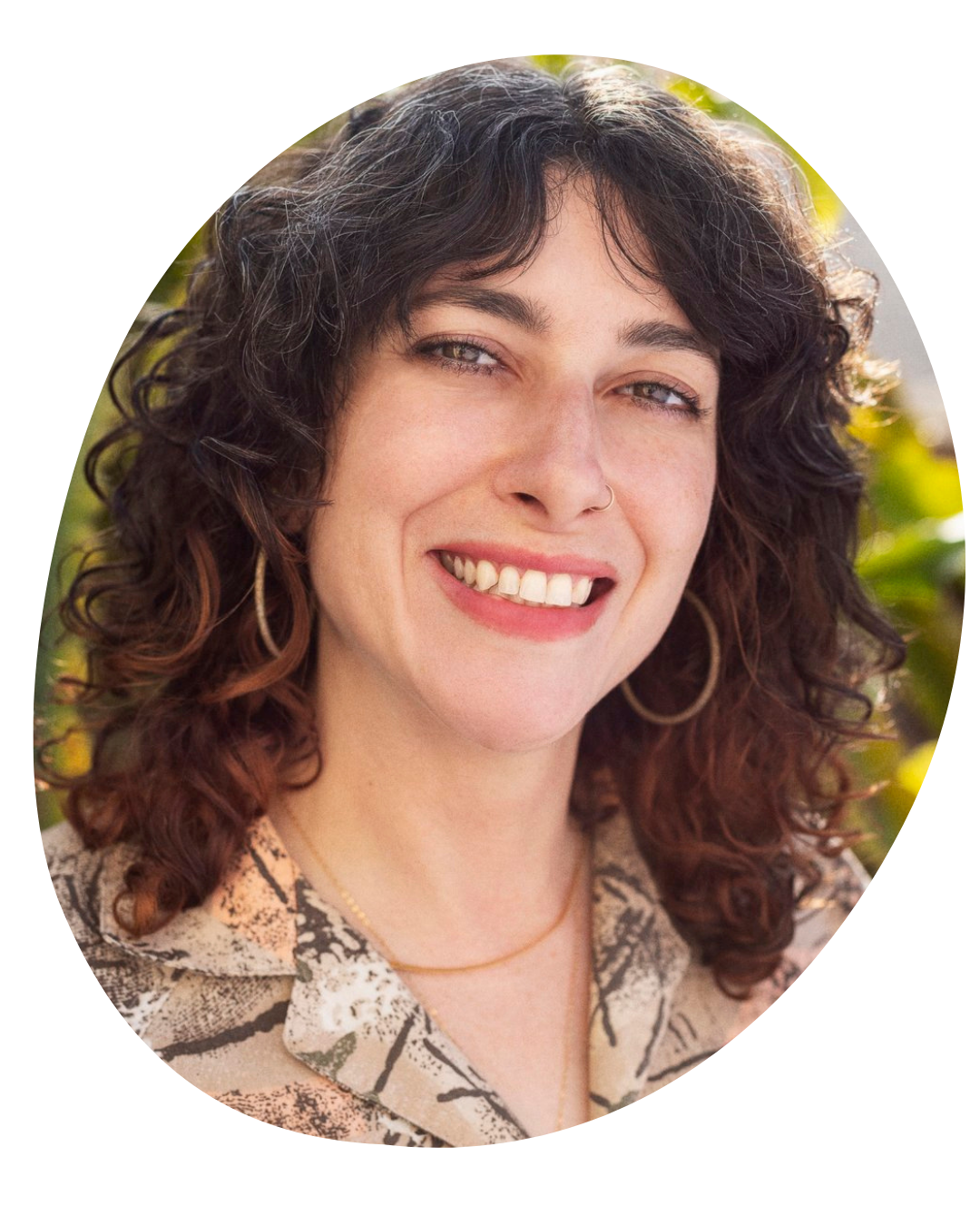
Smiling woman with curly dark hair in a light floral blouse, outdoors with greenery in the background

Hi, I'm Cristina Lugo — teenager therapist serving Arcadia, CA

I'm a Licensed Clinical Social Worker with over fourteen years of experience supporting teenagers, young women, and adults navigating anxiety, identity, and the complicated terrain of growing up across cultures. As a Puerto Rican-American and Certified EMDR Therapist, I bring a lens that honors the fullness of who my clients are: their heritage, their family systems, and the inner life they are still building. I work from my Pasadena office and offer virtual sessions across California. Therapy isn't about fixing you. It's about helping you remember who you were before the world got loud.

FAQ about my services

  • What is the best type of therapy for young adults and teenagers?

    There isn’t a one-size-fits-all answer. The most effective therapy depends on your stage of life, identity, and needs. EMDR, mindfulness, ACT, and creative approaches can all be helpful when tailored to you.


  • Do you offer therapy in person? What about virtual? Which one is better?

    I prefer in-person therapy because it creates a stronger sense of connection at my Pasadena office. Virtual sessions are also available for convenience, and some clients even choose a mix of both.


  • Do you take insurance?

    I am considered out-of-network. Many PPO plans reimburse part of the cost, and I provide monthly superbills so you can request reimbursement directly from your insurance company.


  • What is your cancellation policy?

    I ask for at least 24 hours’ notice if you need to cancel. If we can’t reschedule in the same week, the full session fee will apply.


  • Do you offer a sliding scale?

    I believe that therapy should be within reach, regardless of what life throws your way. I offer a community-minded sliding scale for individuals affected by systemic stressors, financial strain, or unexpected crises. If this applies to you, please let me know. Together we’ll make a plan that supports your healing while honoring the sustainability of my practice.