
Therapy for Teens and Adults in San Marino

I work with teenagers and young adults who want a therapist who gets it: the cultural complexity, the family loyalty, the weight of carrying things that never got named, and the work of figuring out who you are when the systems around you were not built with you in mind. My practice is explicitly decolonial and identity-affirming, and I bring both as a professional commitment and as something I understand personally.
Figueroa Street runs through the heart of this neighborhood with its murals, independent coffee shops, and the monthly art walk that reflects how much creative life this community generates and holds. York Boulevard connects Cypress Park, Glassell Park, and Highland Park proper in a corridor that has changed significantly in recent years while its Latine, working-class, and multigenerational family roots run deep. Occidental College sits on the western edge of Eagle Rock, bringing a different kind of institutional presence to the area, and the broad stretch of Northeast LA includes communities that have a strong sense of identity and history.
Many of the young people from this area who find their way to therapy are navigating something specific: what it means to hold a strong cultural identity in a rapidly changing neighborhood, to be Latine or mixed or queer or all of it at once, and to do the work of self-understanding in a mental health system that has historically not been built for you. Therapy for teens in Highland Park and Northeast LA at my practice is rooted in that reality and built around the actual person in the room, not a template of who that person is supposed to be.

How it works

My approach starts with your whole story

I practice from a decolonial lens, which means I question the assumptions that often go unexamined in mental health settings: about what is normal, what is healthy, what healing should look like, and whose experience the framework was built to accommodate. In my practice, the framework is built around you. I use a combination of approaches including EMDR, talk therapy, and creative tools, and I adapt based on what actually resonates for each person.

Book a discovery call

We begin with a free 20-minute consultation. No intake, no paperwork, no performance of having it all figured out. You tell me what is happening and I share what I do and how I work. We decide together if this feels right. That is all.

What ongoing work actually looks like

Over time, my clients develop a clearer, more grounded sense of who they are: one that can hold their cultural context without being defined by anyone else's idea of what that means. They build genuine self-trust, the capacity to know what they need, and the tools to ask for it. That kind of development changes the texture of everything else in their life.

Explore my therapy services and specializations


A lot of the young people I work with from Northeast LA communities are navigating a particular kind of coming-of-age: figuring out who they are against a backdrop of displacement, gentrification, family sacrifice, and the ongoing work of holding a cultural identity in a world that keeps trying to flatten it. That context matters. I do not ask clients to set it aside in order to talk about their feelings. In sessions, the whole context comes in. We talk about what is happening in their life and in their body, and we do not separate the personal from the political or the individual from the cultural. That integration is part of what makes the work actually useful. What builds over time is a more rooted sense of self: someone who knows where they came from, is figuring out where they are going, and is building something that genuinely belongs to them.

Community-level stress and intergenerational experiences of trauma often live in the body in ways that are not fully accessible through talk alone. The hypervigilance that has been normalized across generations. The physiological response to stress that feels disproportionate to the immediate situation. The patterns that persist despite genuine insight about where they came from. EMDR addresses this by working at the level of the nervous system rather than requiring narrative or analysis. It helps the brain process experiences that have been held in a state of incomplete integration, which can produce shifts that more purely verbal approaches cannot reach. I am a Certified EMDR Therapist, and I approach this work with deep respect for the context each client brings. EMDR is not a one-size-fits-all tool; I adapt how I use it to fit the specific person and what they are carrying.

For young people in communities facing economic stress, displacement pressure, and the ongoing challenges of living in a city that is actively changing around them, anxiety is often rooted in something real. The worry is not irrational. The hypervigilance makes sense given the environment. And yet it is still exhausting to carry, and it still deserves attention. In sessions, we work with anxiety in its actual context rather than trying to separate it from its causes. We develop ways to manage the nervous system's response even when the external situation is genuinely uncertain. And we build resilience that does not require the environment to become safe before the person inside it can function. What clients report over time is a greater capacity to navigate difficulty without being swallowed by it: still responding to the real, but with more choice in how they respond.

Depression in Latine and BIPOC communities often shows up in culturally specific ways: being fuerte, not making it a big deal, carrying it alone so that others are not burdened. Teenagers from these communities often have very little modeling for what it looks like to acknowledge struggle, seek help, and receive it. In my practice, we disrupt that pattern with care and without judgment. We name what is actually happening. We treat it seriously. And we do it in a space that is built for this person's specific experience, not a generic version of what a struggling teenager is supposed to look like. What develops over time is not just relief from symptoms but a new template: the knowledge that reaching out works, that the person's inner life matters, and that care is something they deserve.

For communities that have experienced colonization, migration, economic precarity, and ongoing systemic harm, trauma is rarely a discrete event. It is a texture of experience that has accumulated across time and generations. The individual teenager sitting in my office may be carrying something that started decades before they were born. I work with this kind of layered, contextual trauma with both clinical rigor and cultural humility. We approach what is present in this person's experience without requiring it to fit any particular narrative of what trauma is supposed to look like. The healing involves building a relationship with safety that is rooted in the client's own body and experience rather than in external circumstances that may or may not change. That kind of internal safety is real and it holds.

In first-generation and working-class families, academic performance is often understood as the path out, which means burnout carries implications that go well beyond grades. The teenager who cannot perform academically is not just struggling at school; they are disrupting a script that the whole family has been following. In sessions, we hold that complexity with honesty and compassion. We make room for the weight of the expectation, the genuine limits of this person's current capacity, and the question of what sustainable success could actually look like for them specifically. Clients who work through this tend to come out with a more honest relationship with their own capabilities and a clearer sense of the kind of life they want to build: one that honors the sacrifice without requiring them to disappear inside it.

Reaching the other side of education in a family where you are among the first to do so can produce a particular kind of disorientation. The milestone is real and the pride is real, but what comes after it does not have a map. The path that was so clear through school has ended, and figuring out what comes next on your own terms is harder than anyone prepared you for. Post-grad depression in this context often carries both grief and possibility: the loss of the structure that held everything up and the genuine opening of a life that can now be built intentionally. Holding both of those things at once is some of the most significant work I do. Clients who do this work tend to emerge with a clearer sense of direction and a greater trust in their own capacity to build something real.

Teenagers from Northeast LA communities often carry trauma in a relational field that includes family, neighborhood, and collective history all at once. Separating any one of those strands is less useful than working with the whole thing: the way that what happened is connected to who the family is, to what the community has been through, and to who this particular young person is becoming inside all of it. I work with teenagers who are carrying this kind of complex, layered experience with patience and genuine care. We move at the client's pace. We build trust. And we work toward a sense of self that is more spacious and more whole than what the trauma tried to make it. What I see over time is young people claiming their own story: not the one the trauma wrote, and not the one their family or community wrote either, but the one that is actually theirs.

Who I serve

My practice serves clients in Highland Park, Cypress Park, Glassell Park, Montecito Heights, El Sereno, and surrounding Northeast LA communities. I offer in-person sessions at my office at 16 S Oakland Ave Suite 211 in Pasadena, accessible from Highland Park via the Gold Line, and virtual sessions for anyone in California. An embedded map below shows the surrounding service area.
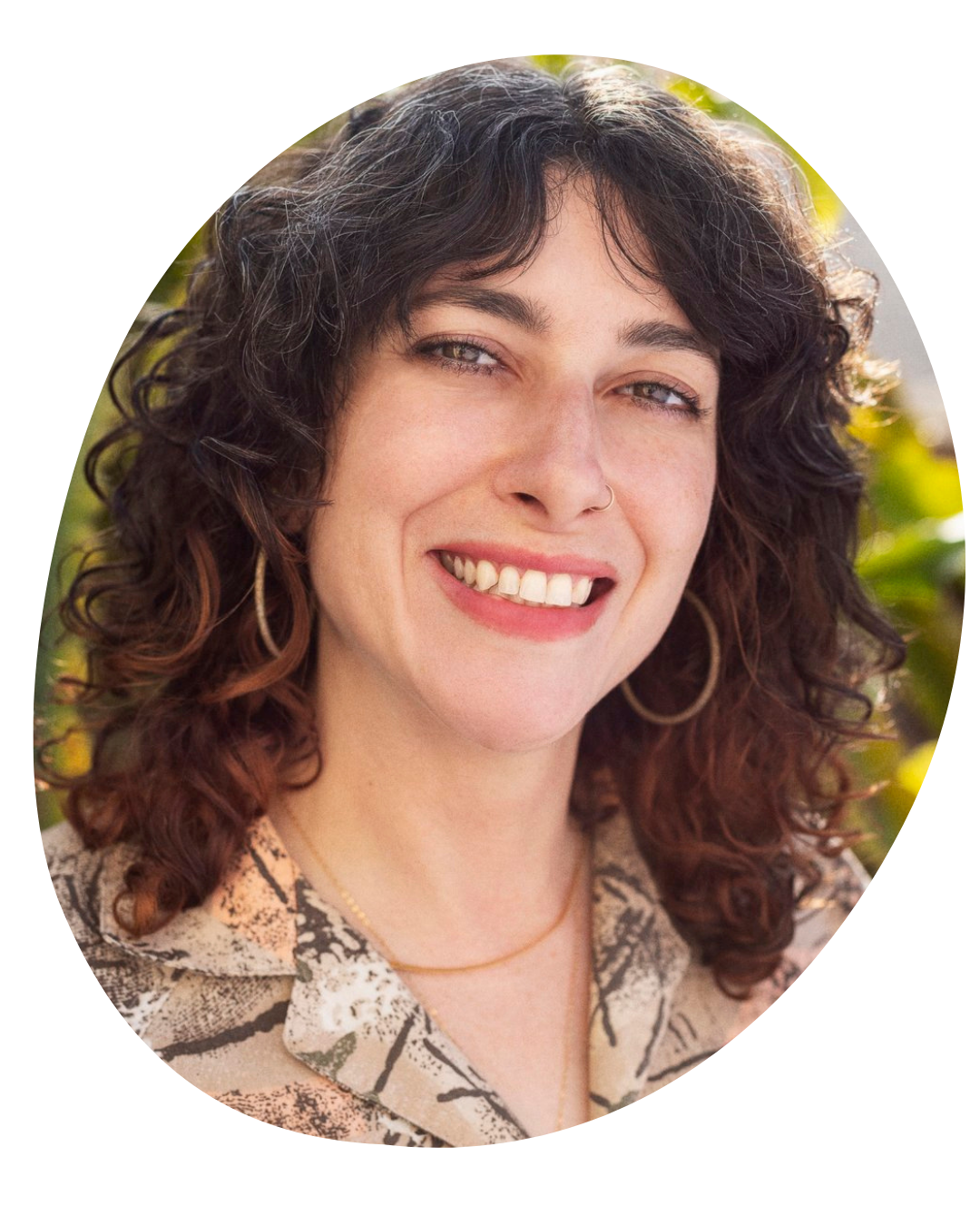
Smiling woman with curly dark hair in a light floral blouse, outdoors with greenery in the background

Hi, I'm Cristina Lugo — teenager therapist serving Highland Park and Northeast LA, CA

I'm a Licensed Clinical Social Worker and Certified EMDR Therapist with over fourteen years of experience working with teenagers, nonbinary youth, and young adults. As a Puerto Rican-American therapist, I bring a decolonial, community-rooted lens to this work and a genuine commitment to practice that honors the full context of who my clients are: their culture, their family systems, their history, and their own developing identity. I work from my Pasadena office, accessible from Highland Park via the Gold Line, and offer virtual sessions across California. Therapy isn't about fixing you. It's about helping you remember who you were before the world got loud.

FAQ about my services

  • What is the best type of therapy for young adults and teenagers?

    There isn’t a one-size-fits-all answer. The most effective therapy depends on your stage of life, identity, and needs. EMDR, mindfulness, ACT, and creative approaches can all be helpful when tailored to you.


  • Do you offer therapy in person? What about virtual? Which one is better?

    I prefer in-person therapy because it creates a stronger sense of connection at my Pasadena office. Virtual sessions are also available for convenience, and some clients even choose a mix of both.


  • Do you take insurance?

    I am considered out-of-network. Many PPO plans reimburse part of the cost, and I provide monthly superbills so you can request reimbursement directly from your insurance company.


  • What is your cancellation policy?

    I ask for at least 24 hours’ notice if you need to cancel. If we can’t reschedule in the same week, the full session fee will apply.


  • Do you offer a sliding scale?

    I believe that therapy should be within reach, regardless of what life throws your way. I offer a community-minded sliding scale for individuals affected by systemic stressors, financial strain, or unexpected crises. If this applies to you, please let me know. Together we’ll make a plan that supports your healing while honoring the sustainability of my practice.