

ADHD in teens: beyond the stereotypes (and how therapy helps)
If you have spent years wondering whether your teen is lazy, defiant, or simply not trying hard enough, I want you to consider a different possibility. ADHD in teens rarely looks like the hyperactive stereotype most people picture from childhood. It often looks like a bright kid who forgets assignments they finished, melts down over what seems like nothing, or shuts down completely rather than start a task that feels too big. None of that means something is wrong with your teen's character. It usually means their brain is working exactly the way an ADHD brain works, and no one has explained that to them yet in a way that helps.
In this post, I want to walk past the stereotypes and get specific about what ADHD in teens really looks like, why girls in particular are so often missed, what is happening underneath the behaviors you are seeing, and how therapy helps, whether or not medication is part of the picture.
In case you are new here, I am Cristina Lugo, and I offer therapy for teenagers across Pasadena and the greater Los Angeles area. Much of my work involves helping teens and their parents understand what is really driving behavior that looks confusing or frustrating from the outside, including ADHD, anxiety, and the ways the two often show up together. If you are here because your teen has been struggling and you are trying to separate the diagnosis from the stereotype, this is a good place to start.
What are the signs of ADHD in a teenager?
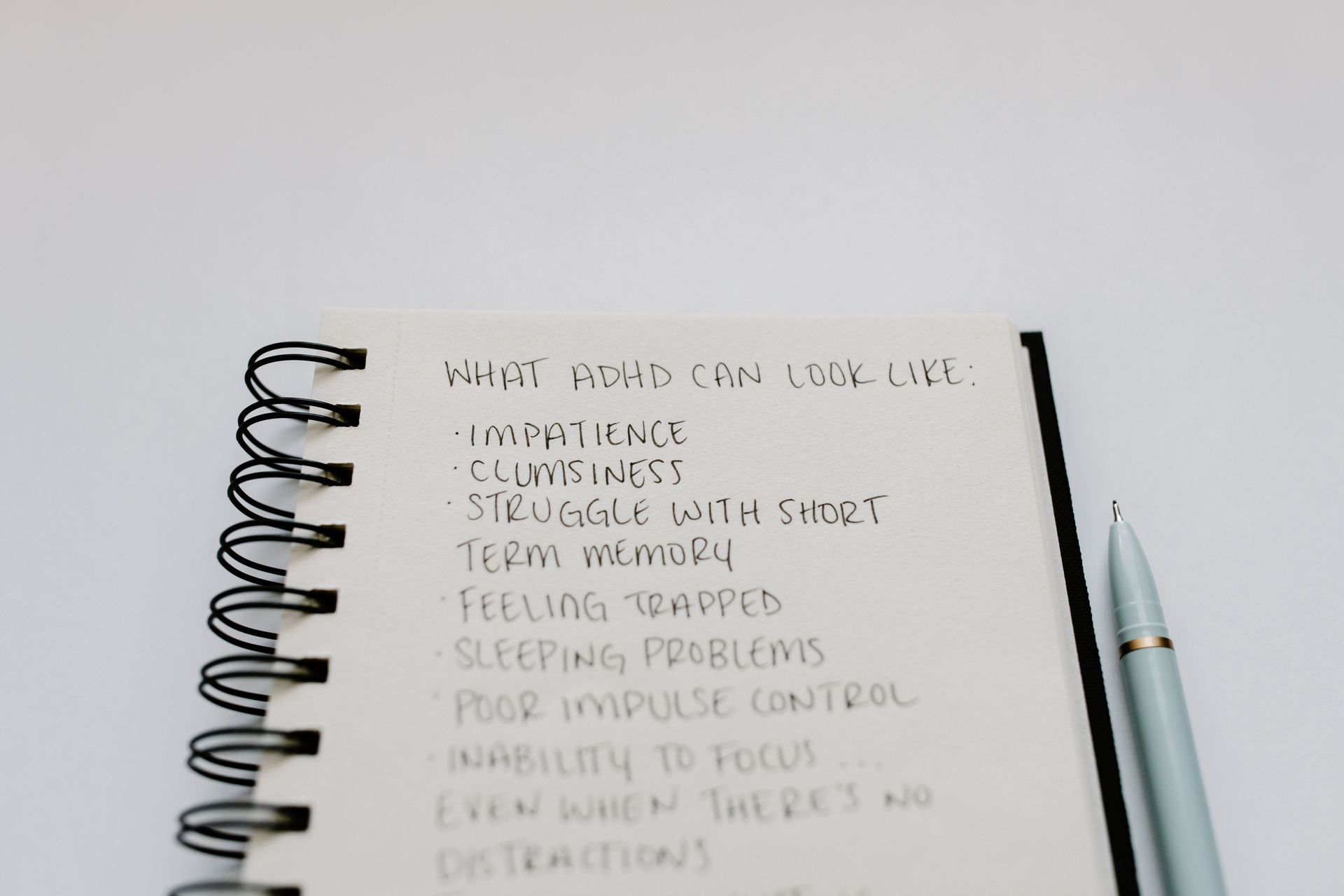
ADHD in teens shows up differently than most people expect. It is not only the kid bouncing off the walls in class. For many teens, ADHD looks like chronic lateness, half-finished projects, a bedroom that never stays organized no matter how many systems you try, or a pattern of starting the day with good intentions and ending it having done almost none of what was planned. Some teens are quiet and inwardly restless rather than visibly hyperactive, which is part of why ADHD gets missed or misread well into the teenage years. Understanding the range of how ADHD really presents matters because a teen who does not match the stereotype often goes without support for years.
What does inattentive ADHD look like versus hyperactive ADHD?
Hyperactive ADHD is the version most people recognize: fidgeting, interrupting, difficulty sitting still, and a kind of restless energy that is hard to miss. Inattentive ADHD looks almost like the opposite. A teen with inattentive ADHD might seem spacey, forgetful, or slow to get started, even though their mind is often racing internally with thoughts that are hard to organize or prioritize. They may lose track of time, forget instructions moments after hearing them, or drift off mid-conversation, not because they do not care, but because their attention has a hard time staying anchored to one thing at a time. Many teens have a mix of both presentations, and the specific combination shapes what support looks like.
What does an ADHD meltdown really look like?
An ADHD meltdown is rarely about the thing that seems to have triggered it. A missing shoe or a canceled plan can be the final straw after a day of holding it together through sensory overload, social effort, and the constant low-grade exhaustion of trying to function in a world that was not built for how their brain works. From the outside, it can look like an overreaction. From the inside, it is often a nervous system that has simply run out of capacity to regulate for one more minute. Understanding this shifts the goal from stopping the meltdown to reducing the load that led to it in the first place. I go into more detail on how this same kind of overload builds up in stress in high schoolers and how it shapes their emotional world, which is worth reading even if ADHD is not the primary concern, since the underlying nervous system pattern is often the same.
Why does ADHD look different in teenage girls than the stereotype?
Most of the research and most of the public understanding of ADHD was built around how the condition shows up in boys, which means girls have historically been diagnosed later, if at all. Girls are more likely to internalize their symptoms rather than act them out, which makes ADHD in teenage girls easy to mistake for anxiety, moodiness, or simply being a disorganized teenager. The cost of that delay is real. Many girls spend years believing they are lazy or not trying hard enough, when what they are really dealing with is an unrecognized neurological difference that therapy and, in some cases, medication can meaningfully support.
What symptoms get missed or misread in girls?
In girls, ADHD often looks like daydreaming, over apologizing, chronic people pleasing, or an intense effort to appear put together on the outside while everything feels chaotic internally. A girl with ADHD might be labeled a perfectionist because of how hard she works to compensate for a brain that does not organize information the way school expects it to. She might seem anxious because so much of her energy goes into managing the fallout of forgotten assignments or missed details. These presentations get treated as personality traits or as anxiety on their own, when they are frequently a teen's best attempt at managing undiagnosed ADHD.
Why do so many girls get diagnosed later than boys?
Diagnostic criteria for ADHD were developed primarily by observing hyperactive boys, so clinicians, teachers, and parents were trained to look for a specific presentation that does not match how ADHD shows up in most girls. A quiet, high-achieving girl who is falling apart internally rarely raises the same red flags as a boy who cannot sit still in class. By the time many girls are diagnosed, often in their teens or twenties, they have spent years internalizing the belief that their struggles are a personal failing rather than a treatable, explainable pattern.
What is happening underneath the behavior?
Once you move past the visible behaviors, ADHD becomes easier to work with rather than fight against. Two things tend to matter most here: understanding why traditional discipline approaches fall short, and understanding the emotional cost that years of misunderstanding can leave behind.
Why don't willpower and consequences alone change ADHD symptoms?
ADHD is not a discipline problem, which is why punishment-based approaches so often fail. The teen forgetting their homework for the third time this week is not choosing to forget on purpose, and adding consequences on top of a brain that already struggles with executive function tends to add shame without adding skill. Executive function, the mental system responsible for planning, starting tasks, and managing time, develops differently in ADHD brains. No amount of wanting to do better rewires that system on its own. What helps is building external structures and internal awareness that work with the brain a teen has, not against it.
How does ADHD affect a teen's sense of self and confidence over time?
Years of being told to try harder, pay attention, or just remember next time take a toll. Many teens with ADHD develop a quiet belief that they are inherently careless or not smart enough, even when they are clearly capable. That belief often shows up long after the ADHD itself is diagnosed and managed, because the emotional residue of years of correction does not disappear just because a diagnosis finally explains what was happening. Addressing self-esteem alongside ADHD symptoms is part of what makes therapy meaningfully different from a purely behavioral or medication-only approach. When that self-esteem hit deepens into something heavier, I also draw on what I write about in understanding depression as a teenager, since ADHD and depression can compound each other in ways that are easy to miss if you are only looking for one or the other.
How does therapy help teens with ADHD, with or without medication?
Therapy for ADHD is not about eliminating symptoms, since ADHD is a difference in how the brain is wired, not something to cure. My work with teens focuses on building tools that fit how their brain processes information, alongside repairing the self esteem that so often takes a hit after years of feeling behind or misunderstood.
For teens whose ADHD is closely tangled with anxiety, whether from years of feeling behind or from the social pressure of masking symptoms in front of peers, I often bring in anxiety therapy for teens & young adults alongside ADHD focused work, since the two rarely exist in isolation from each other.
What does therapy work on?
Sessions often focus on building executive function skills like breaking tasks into manageable steps, creating routines that do not rely purely on willpower, and identifying the specific situations that tend to overwhelm a teen's capacity to focus. We also work on the emotional layer, including shame around forgetting things, frustration with inconsistent performance, and the anxiety that builds when a teen feels like they are constantly falling short of expectations they cannot always control. Family sessions are sometimes part of the process too, so parents understand what is happening underneath the behavior and can adjust expectations and support accordingly.
What tools does a teen walk away with?
Teens leave sessions with concrete strategies. That might mean a visual system for tracking assignments, language for asking a teacher for an extension without shame, or a script for explaining to a friend why they seem distracted sometimes. Just as important, teens walk away with a different relationship to their own mind. Instead of interpreting every forgotten task as proof that something is wrong with them, they start to understand ADHD as a difference to work with, not a character flaw to hide.
What should you avoid when supporting a teen with ADHD?
Supporting a teen with ADHD is as much about what you stop doing as what you start doing. The reactions that feel most natural in the moment are often the ones that make things harder over time.
Why do shame and constant correction backfire?
It is tempting to respond to missed homework or a messy room with frustration, especially after the fifth reminder that did not land. But shame does not build executive function. It builds avoidance, secrecy, and a teen who stops telling you when they are struggling because they expect to be criticized rather than helped. The most useful shift I see in families is moving from correcting the teen in the moment to problem-solving with them afterward, once everyone is calm. That does not mean lowering expectations. It means separating the behavior from the teen's worth, and treating the missed task as a signal to adjust the system, not a reason to add more pressure. This pattern of repeated correction is also one of the more common paths into what I describe in signs of academic trauma and how to move toward healing, especially for teens whose ADHD went unrecognized for years before anyone understood what was actually going on.
There is room here for your teen to feel understood
If you have spent years feeling like you are constantly managing your teen's ADHD instead of helping them, I want you to know there is a different way to do this. Your teen is not lazy, and you are not failing as a parent. Both of you are navigating a brain difference that has probably gone unexplained for far too long, and that is something we can work through together.
I work with teenagers navigating ADHD, anxiety, and the toll that years of feeling misunderstood can take on their confidence. Alongside ADHD focused therapy, I offer anxiety therapy for teens & young adults for the teens whose attention struggles and anxious thoughts feed into each other.
I see clients in person in Pasadena and offer sessions to those in South Pasadena and the greater Los Angeles area, as well as virtually across California.

Hi there, I'm Cristina Lugo, LCSW
Trauma-informed therapist for teens & young adults
I help sensitive, thoughtful, and creative young people navigate anxiety, identity, and big life transitions with compassion and clarity. Through culturally responsive and holistic care, I offer therapy that meets you exactly where you are—no judgment, just real support.